Beyond the Trends: Why Colour Harmony Matters in Bridal Makeup
Bridal makeup is not a content creation competition!!
There, I’ve said it!!
And before anyone reaches for their keyboard, let me explain.
We’re living in an era where makeup is increasingly influenced by what performs well on social media. Dramatic transformations, AI, trending techniques and signature Instagram looks are everywhere. As an artist, I love creativity… editorial, runway, fashion and film should push boundaries and break every rule in the book.
But I believe bridal makeup is a different discipline.
After 22+ years in the wedding industry and more than 2,500 weddings, I’ve come to believe one of the most important skills isn’t simply knowing how to recreate a look. It’s understanding why that look works for the person wearing it.
A technique that looks spectacular on one face may not have the same effect on another. A lipstick or blush trending everywhere might fight against someone’s natural colouring. And a signature Instagram look isn’t automatically the right choice for every bride.
Your wedding makeup isn’t being created for one social media post. It’s going to be photographed, filmed, remembered and revisited for decades.
And that’s where I believe we’ve lost sight of something incredibly important.
Colour harmony.…
The education gap: Are we teaching artists to understand colour, or just apply it?
Here’s something I’ve been questioning as I’ve delved deeper into colour analysis.
Are makeup artists being given the right foundations to understand colour harmony in the first place? In my experience, traditional makeup education tends to cover the colour wheel, complementary and contrasting colours, using colour to create impact with eyeshadow, colour correction and finding a suitable foundation match.
All important skills, absolutely.
But knowing how to use the colour wheel is not the same as understanding the colouring of the person sitting in front of you.
Are we really taught to look beyond what’s visible on the surface? To recognise underlying skin undertones, understand natural hair colouring, assess contrast and consider how all these elements work together?
Think about a bride who arrives at her trial with a deep, warm spray tan and honey blonde dyed hair. It’s easy to look at those visible tones and instinctively reach for warmer foundation, blush and eyeshadow shades to match.
But what if her natural skin undertone is cool or neutral? What if her natural hair is much darker and cooler?
Matching the warmth we see on the surface doesn’t necessarily create harmony. It can sometimes take us further away from what actually complements her.
Of course, her tan, chosen hair colour and wedding styling matter. It’s about understanding the difference between her natural colouring and the changes she’s made, then making informed decisions about how to bring everything together.
I think there’s a gap between being taught how to apply colour and being taught how to assess it on an individual. And if we’re not taught to recognise these things during our foundational training, how are we expected to know what we’re missing?
For me, studying personal colour analysis has added another layer to the skills I’ve spent more than two decades developing.
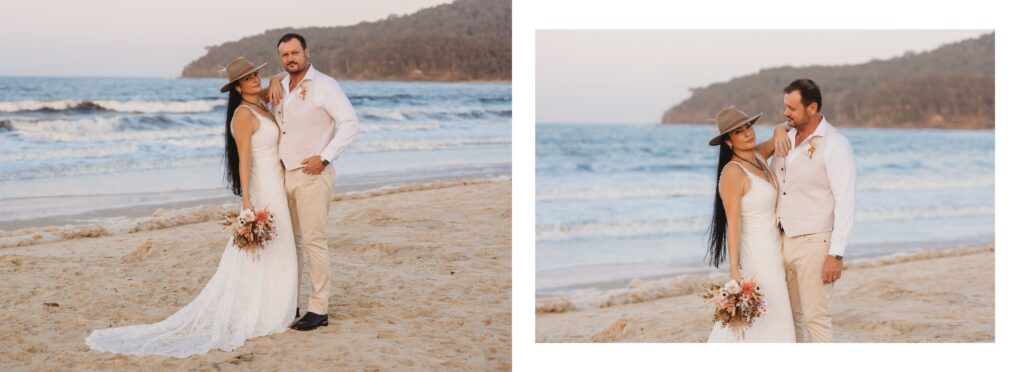
And I didn’t just study this theory. I put it to the test on my own wedding day. I chose colours I would never previously have considered wearing, stepped right outside my comfort zone and trusted the principles of colour harmony. The result surprised even me. I’ve shared my own photos further down at the end, because sometimes you have to be willing to practise what you preach!
The Instagram effect: When the trend becomes more important than the person
I recently shared a before and after of a bride, with her permission, after she had asked me to use her own makeup products for her wedding look.
It raised an interesting question: how do you balance respecting what a client wants with your professional responsibility to guide them towards a result you believe will be more flattering and cohesive?
Sometimes the colours, undertones or combination of products simply aren’t working together as well as they could.
The post was about that very dilemma. Not about taking away a client’s choice, but about the value of professional knowledge and being able to explain why an alternative might work better.
Let’s just say it generated a healthy discussion. And by healthy, I mean a few rather enthusiastic keyboard warriors! 😂
Some comments were genuinely unpleasant, but I stayed professional and positive. And, in the spirit of finding the funny side, it was also my highest engagement post ever. So thank you, algorithm!
But beneath the noise, it reinforced something important.
Education matters. Professional knowledge matters.
Our job isn’t simply to apply products or recreate a photograph someone has saved on Pinterest. It’s to understand why certain colours, textures, placements and finishes work, and how to adapt them to the individual sitting in our chair.
A makeup look can be technically impressive, beautifully executed and collect thousands of likes. But does that automatically make it the right look for the person wearing it?
I don’t believe we should blindly follow trends, nor dismiss them. Trends can inspire us and introduce wonderful new techniques. But popularity isn’t the same as expertise, and a bride isn’t a blank canvas for an artist to stamp their signature Instagram look onto.
The best makeup artists don’t just know how to create a look. They understand why they’re creating it.
Understanding your natural colouring
Over the past three months, I’ve been immersing myself in personal colour analysis study. You may have seen the seasonal system everywhere lately: Winter, Spring, Summer and Autumn.
Each season has its own general characteristics:
- Winter: Cooler, clearer and higher in contrast.
- Spring: Warmer, brighter and fresher.
- Summer: Cooler, softer and more muted.
- Autumn: Warmer, richer and earthier.
There are further variations within each season, so it’s not quite as simple as putting someone into one of four boxes.
What fascinates me is how colour interacts with our natural features. Skin undertone, hair and eye colour, and the contrast between them can all influence which shades create harmony.
Think about a cool rose pink versus a warm peach blush. Both can be beautiful, but on different complexions one may bring the face to life while the other feels less balanced.
The same applies to lipstick, eyeshadow and bronzer. It’s not about declaring colours right or wrong. It’s about understanding why a colour works.
And one of the biggest lessons I’ve taken from studying colour analysis is just how important undertone is. It goes well beyond finding a foundation that matches your face.
Fake tan can change the surface appearance of the skin. Hair may be dyed several shades away from its natural colour, and brows may be tinted. Simply looking at someone’s apparent skin or hair colour isn’t always enough. We need to look at the bigger picture.
Looking back with fresh eyes
Here’s something I find particularly interesting.
After more than 22 years in the wedding industry and over 2,500 weddings, I thought I had a pretty good understanding of what worked. And I still believe experience is invaluable.
But studying colour analysis has given me another perspective.
I’ve been looking back through my older work and noticing little things I might approach differently today. Not because those looks were bad or the techniques were wrong, but because I can now see opportunities for greater harmony and cohesion.
A slightly different blush tone. A more harmonious lip colour. A different approach to warmth or contrast.
Sometimes the changes are subtle, but the overall effect can be surprisingly significant.
It’s a reminder that experience doesn’t mean you stop learning. In fact, I think the willingness to keep questioning, refining and improving your craft is what makes you a better artist.
So, does colour analysis mean there are new rules?
Absolutely not.
I don’t want brides to feel restricted by a seasonal palette or believe they can’t wear a lipstick, eyeshadow or blush because it doesn’t fit neatly into a category.
If you adore a particular colour, that matters too. Personal style, personality and preference should always be part of the conversation.
Colour analysis is a guide, not a set of instructions. It gives us another way to understand how colour interacts with your features and create a more cohesive result.
Sometimes the most beautiful outcome comes from understanding the guidelines well enough to know when to bend them.
What does this mean for your bridal hair and makeup?
At Hollywood Brides, we’ve always believed bridal beauty should feel personal.
We want you to look like yourself. Your most confident, polished and beautiful self.
That means looking beyond the latest trends and inspiration images to consider your complexion, undertone, eyes, hair colour, personal style and the overall aesthetic of your wedding.
Whether we’re creating bridal hair and makeup for a Brisbane bride, a Sunshine Coast wedding or somewhere in between, the starting point should always be the individual.
We’ll still happily create full glam, soft glam, natural beauty. The important thing is that the look belongs to you.
Because trends will always come and go.
But understanding colour harmony helps create a look that feels like it was made for you.
Natural. Polished. Unapologetically YOU.
With more than 22 years of experience creating bridal hair and makeup across Brisbane and the Sunshine Coast, Hollywood Brides is always looking for ways to refine our craft, learn more and give our brides an even better experience.
Beautiful people. Beautiful stories. Beautiful mornings.
Hollywood Brides | Bridal Hair & Makeup Brisbane and Sunshine Coast
I’d love to know what other artists think.
Was personal colour analysis covered in your original makeup training, or is it something you’ve had to discover and study independently?
And are we doing enough as an industry to understand the difference between matching the colours we see and understanding the colouring underneath?
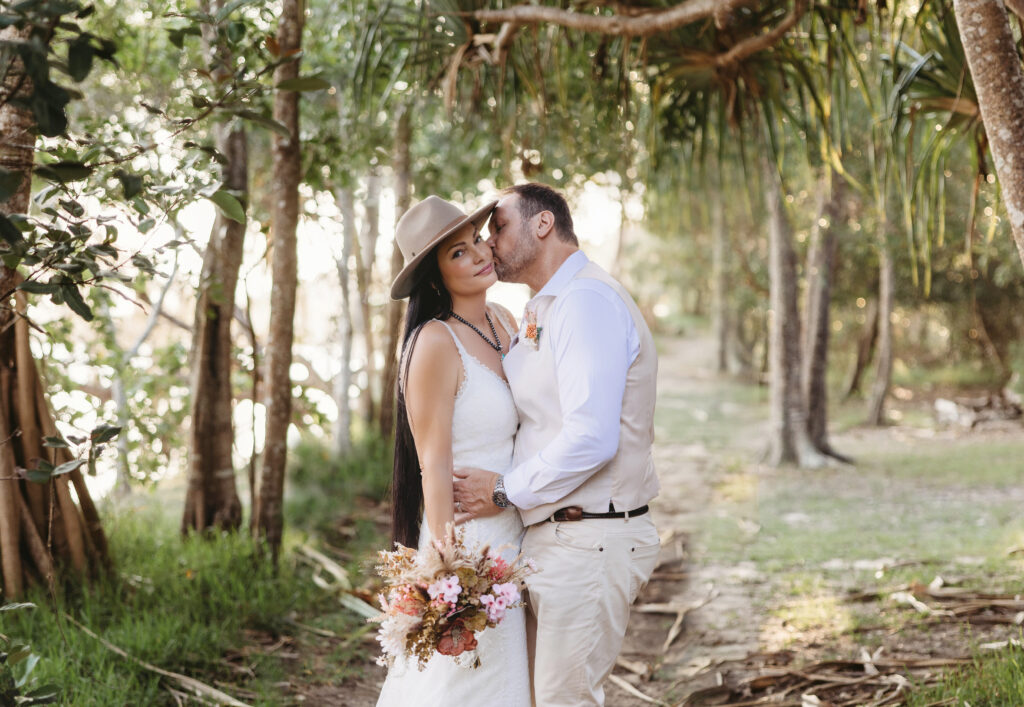
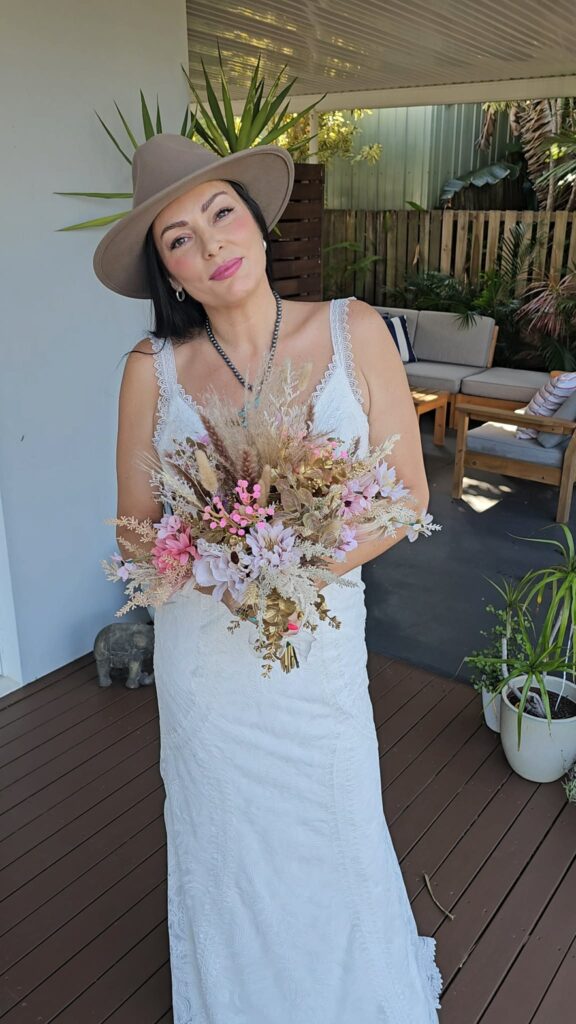
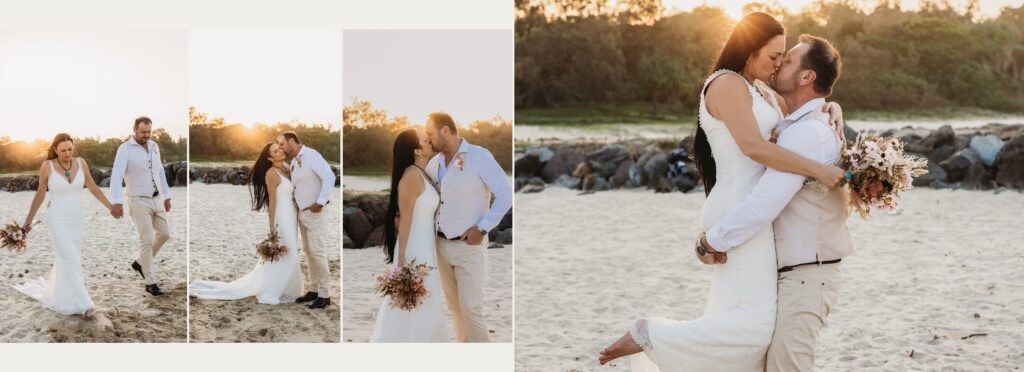
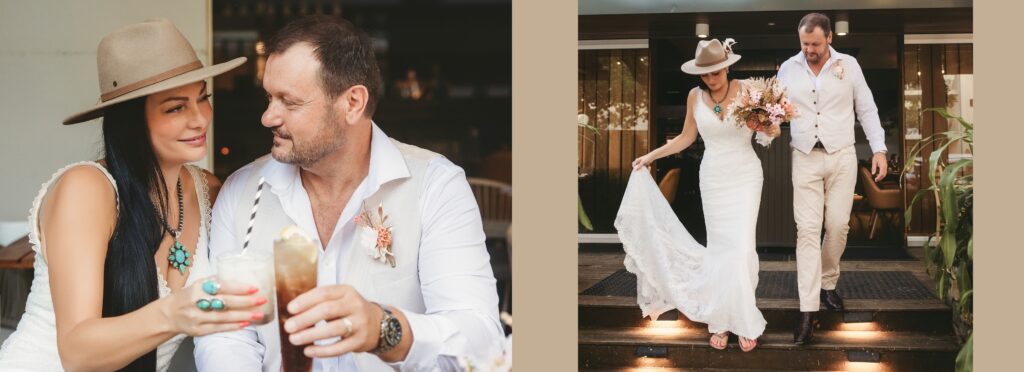
This is me on my wedding day a few weeks ago, wearing colours I would never normally choose. After discovering I’m a Deep Winter, I swapped my usual warm tones and nude lip for bright, cool pinks that work with my natural high contrast.
Knowing we’d be photographed in that beautiful golden hour sunset light, I also understood that warmer tones could leave me looking washed out, and colours can photograph very differently in that light. You can see in the photos below that the bright cooler colours looked completely different.
With my new found colour theory and COMPLETELY outside my comfort zone…. and I absolutely loved it!
Sometimes, the colours we least expect are the ones that bring us to life. Mon xx